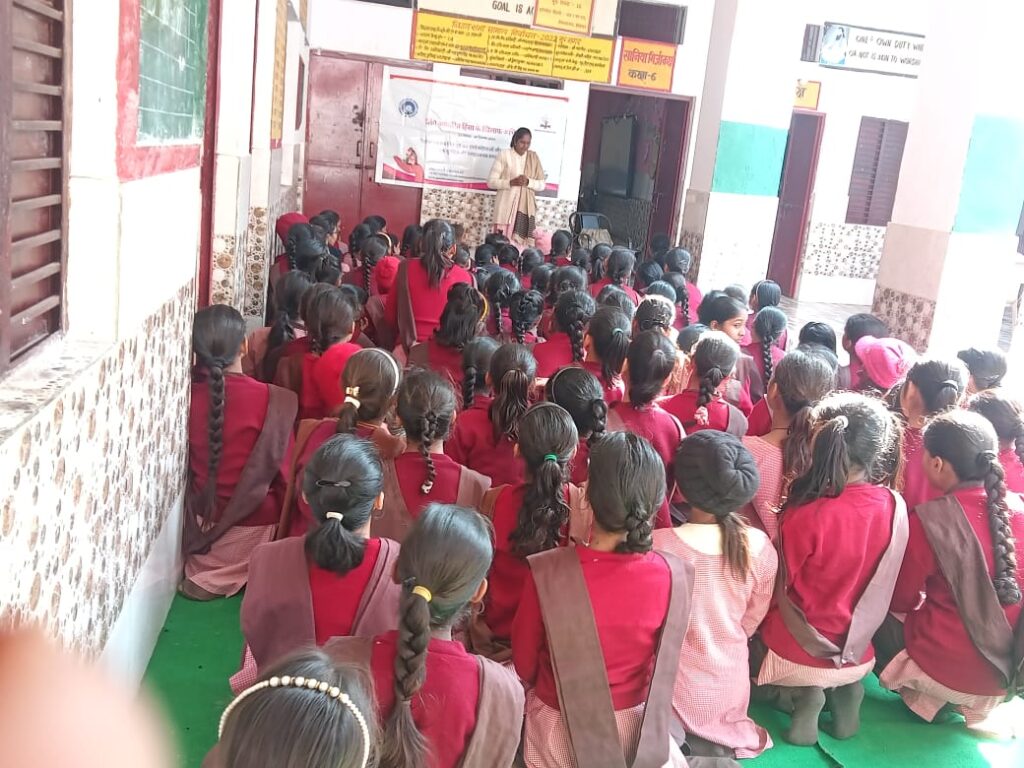
Menstrual health remains a significant challenge for adolescent girls in India, particularly in rural regions. While around 42% of girls aged 10–19 use hygienic menstrual methods, the situation varies widely across states—as low as 23% in Uttar Pradesh compared to over 85% in Tamil Nadu. These disparities highlight the impact of limited awareness, socio-cultural taboos, and economic constraints on menstrual hygiene practices.
For many girls, menstruation is associated with silence, stigma, and lack of accurate knowledge, restricting their ability to manage it safely and with dignity. Inadequate access to menstrual products and sanitation facilities further leads to school absenteeism, health risks, and reduced participation in daily life. As a result, menstrual health continues to be a barrier to education, well-being, and gender equality.